 FlowPayra
EVM · TRON · SOLANA · BITCOIN
Take crypto.
Keep your books straight.
Whatever the buyer pays with, the money lands in one ledger.
✓Every payment records where the money came from and where it went.
FlowPayraCONSOLE
LiveOPERATIONS OVERVIEW
Active networks
EVM99.99%
TRON99.97%
SOLANA99.98%
BITCOIN100%
Ledger reconciliation
✓
Balanced0 discrepancies4chain ecosystems
0keys online
0rounding errors
Ξ EVMTRON◎ SOLANA₿ BITCOIN
ONE SET OF RECORDS
The payment and the balance are one record.
The checkout your customer opens and the console your finance team opens read the same data.
Hosted checkout
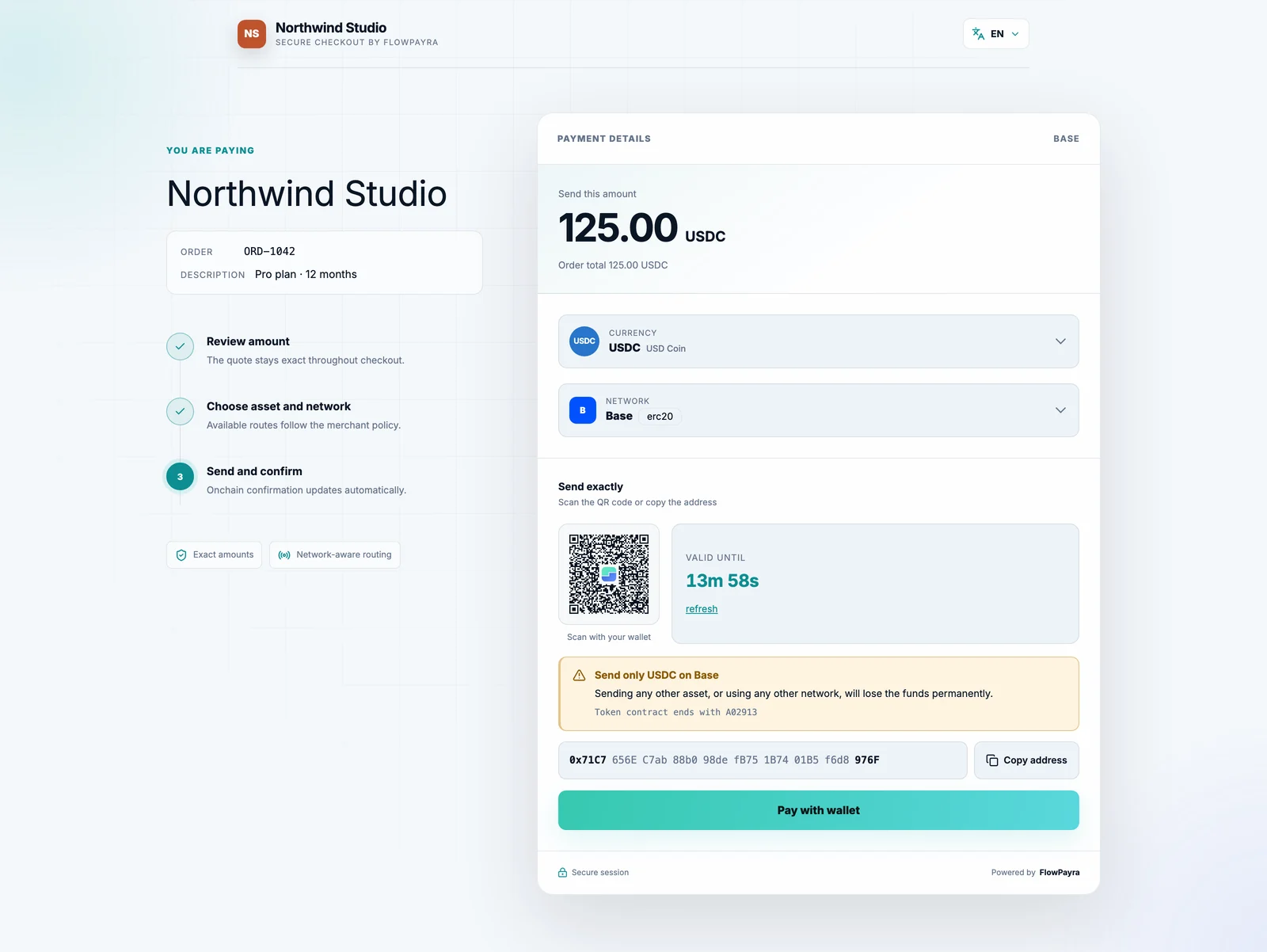
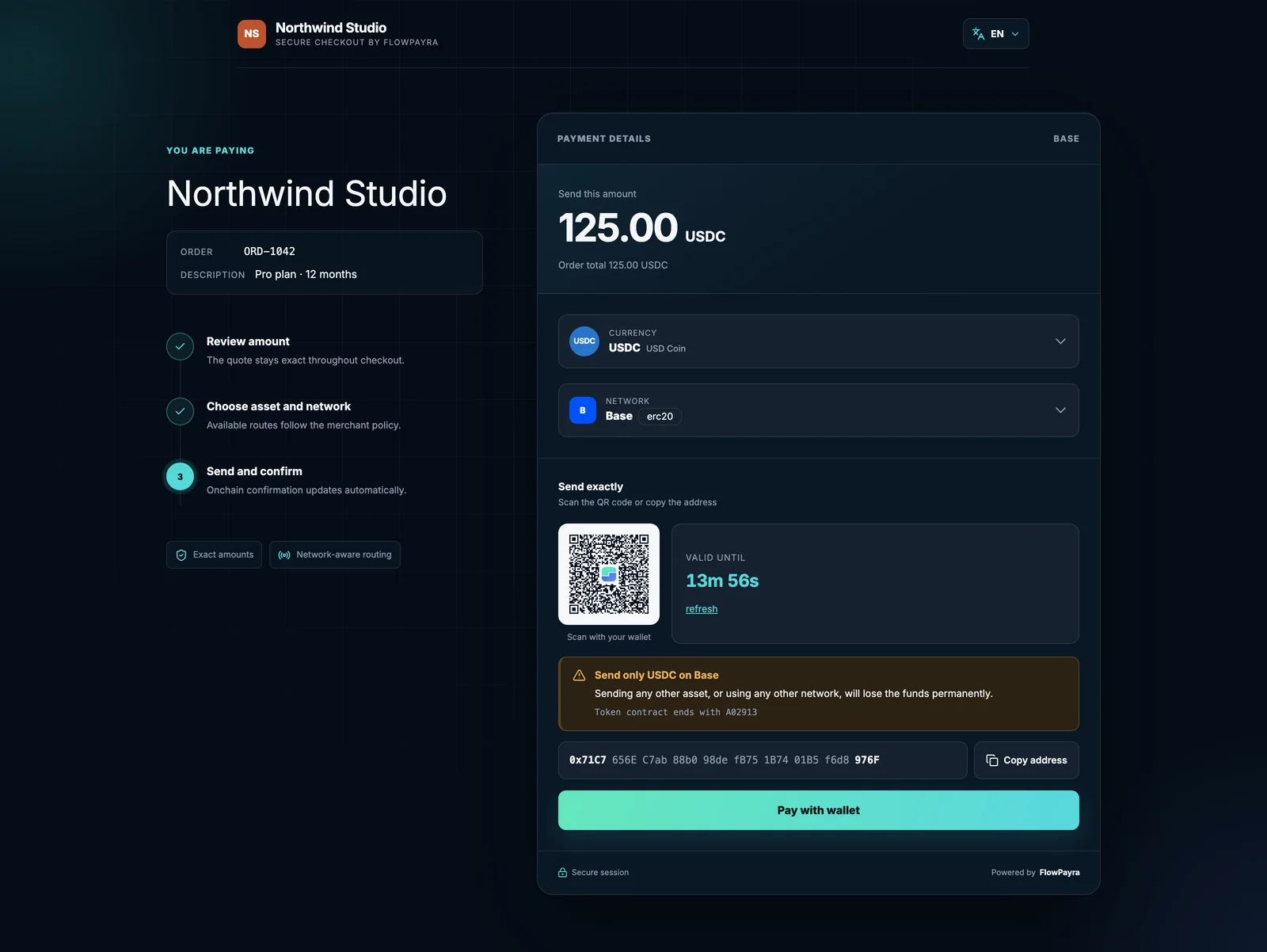
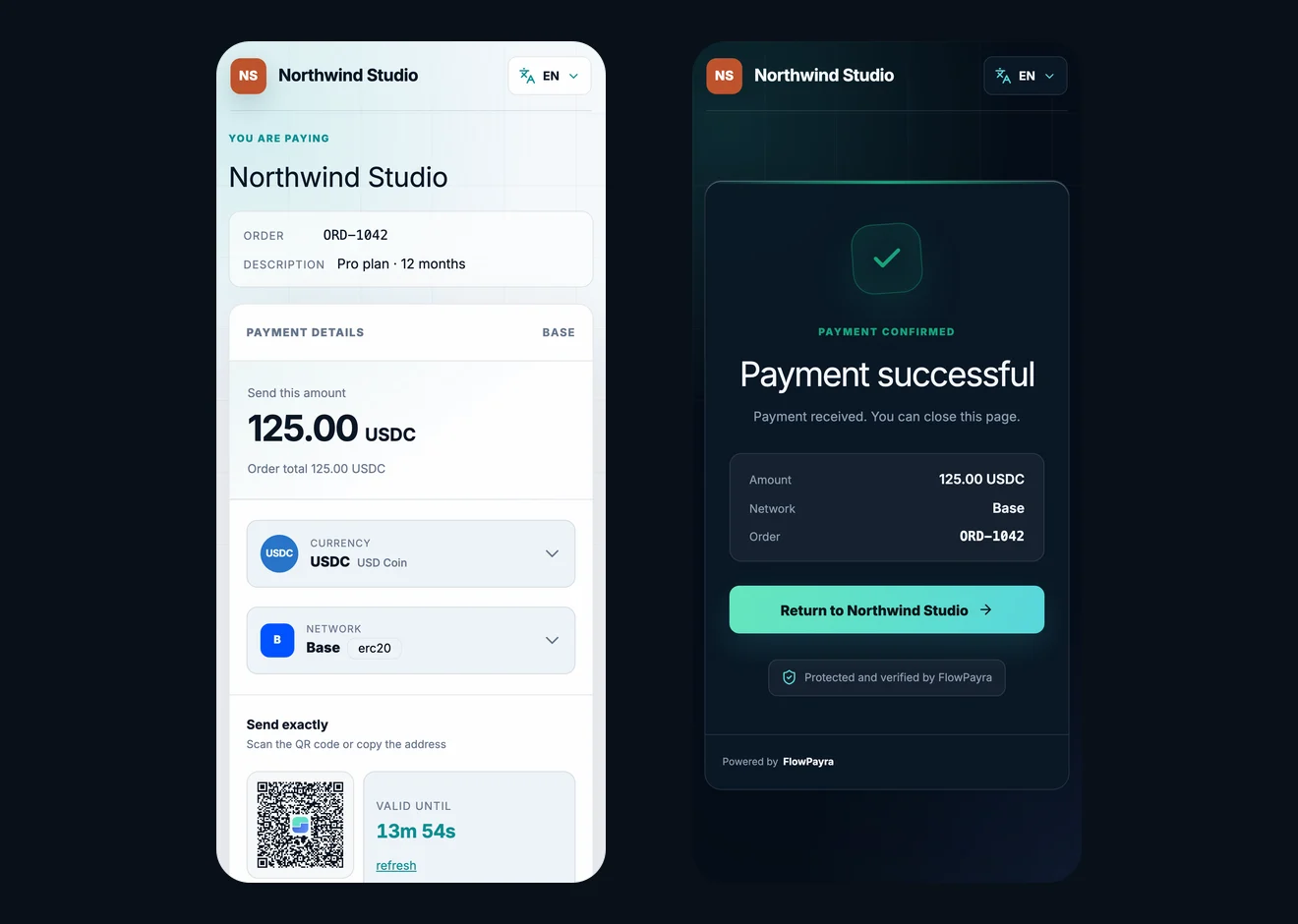
Your buyer sees the exact amount to send on a network you approved, and the page tracks the chain for them.
01x402 & metered payments
Charge an API by call or by measured usage. Whatever the caller authorized and left unused comes back as credit.
02Treasury operations
Withdrawals, collections and payouts go through approval, and every step keeps who approved it.
03One ledger
Fees, splits and on-chain costs land in the same book, so nothing has to be pieced together later.
04CORE PRODUCT CAPABILITIES
From the buyer’s wallet to your books.
Eight capabilities, grouped by where the money is.
1
Money in
- Multichain collection
Quote an exact token amount, issue an address, take QR or wallet payment.
- x402 exact & upto
Charge per API call by fixed price or measured usage. Unused authorization comes back as credit.
- Subscriptions
Recurring billing that freezes the fee and split rules for every period.
2
Split and hold
- Fee-first revenue splits
Platform fee comes off first, then the rest splits by percentage or fixed amount.
- Merchant balances & statements
Available and locked balances, line-by-line movements, exportable statements.
- Credit, underpay & overpay
Top-ups, partial payments and overpayments each have a defined outcome.
3
Pay out and prove
- Collection, withdrawal & payout
Offline-signed collection, address allowlists, approval workflows, scheduled payouts.
- Reconciliation & notifications
Trial balance and chain-to-ledger checks, plus signed webhooks with retry and replay.
THE PRODUCT IN PRACTICE
See it before you integrate.
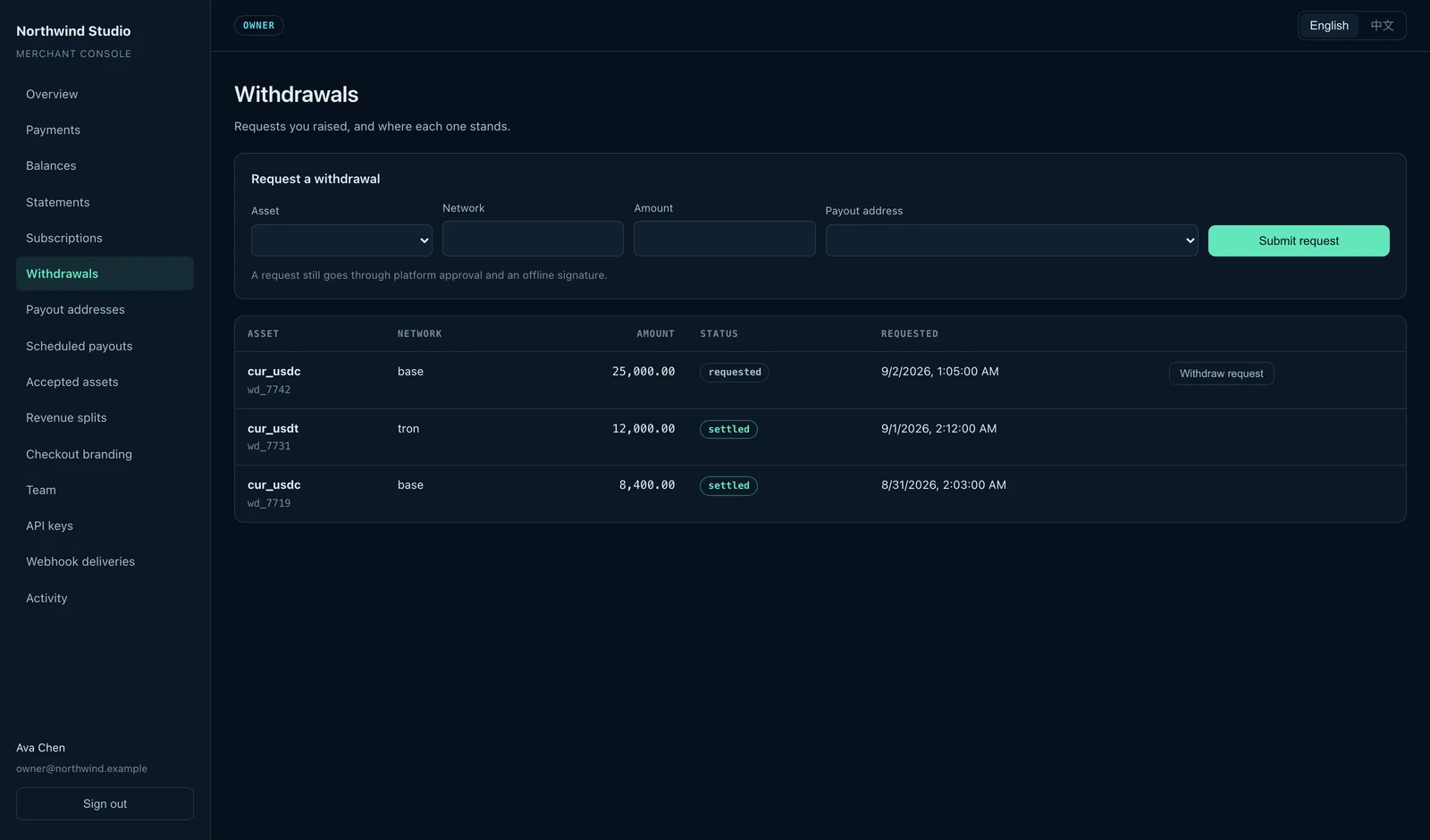
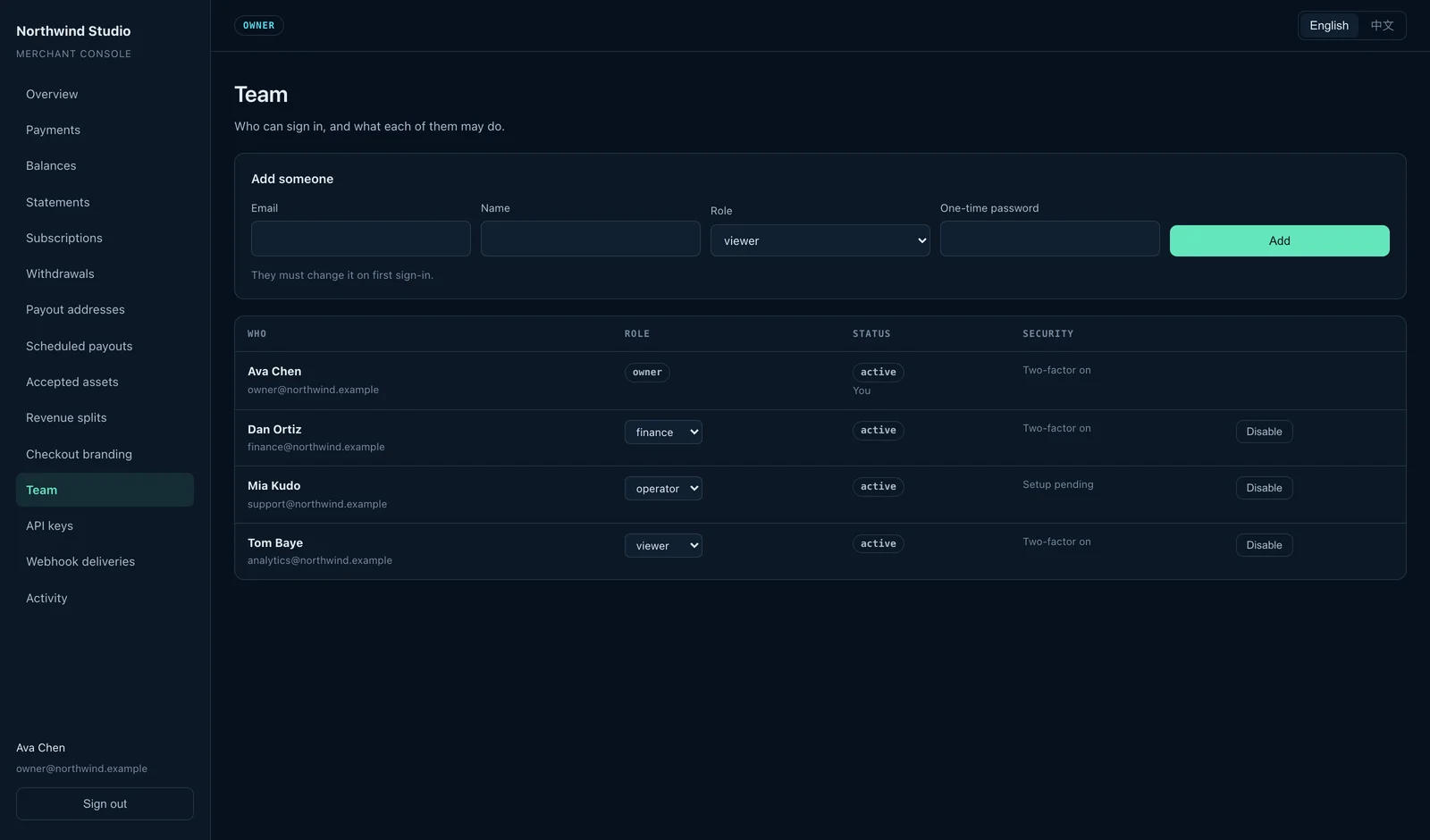
Three consoles: the one your operations team opens, the one your merchant opens, and the checkout your buyer sees.
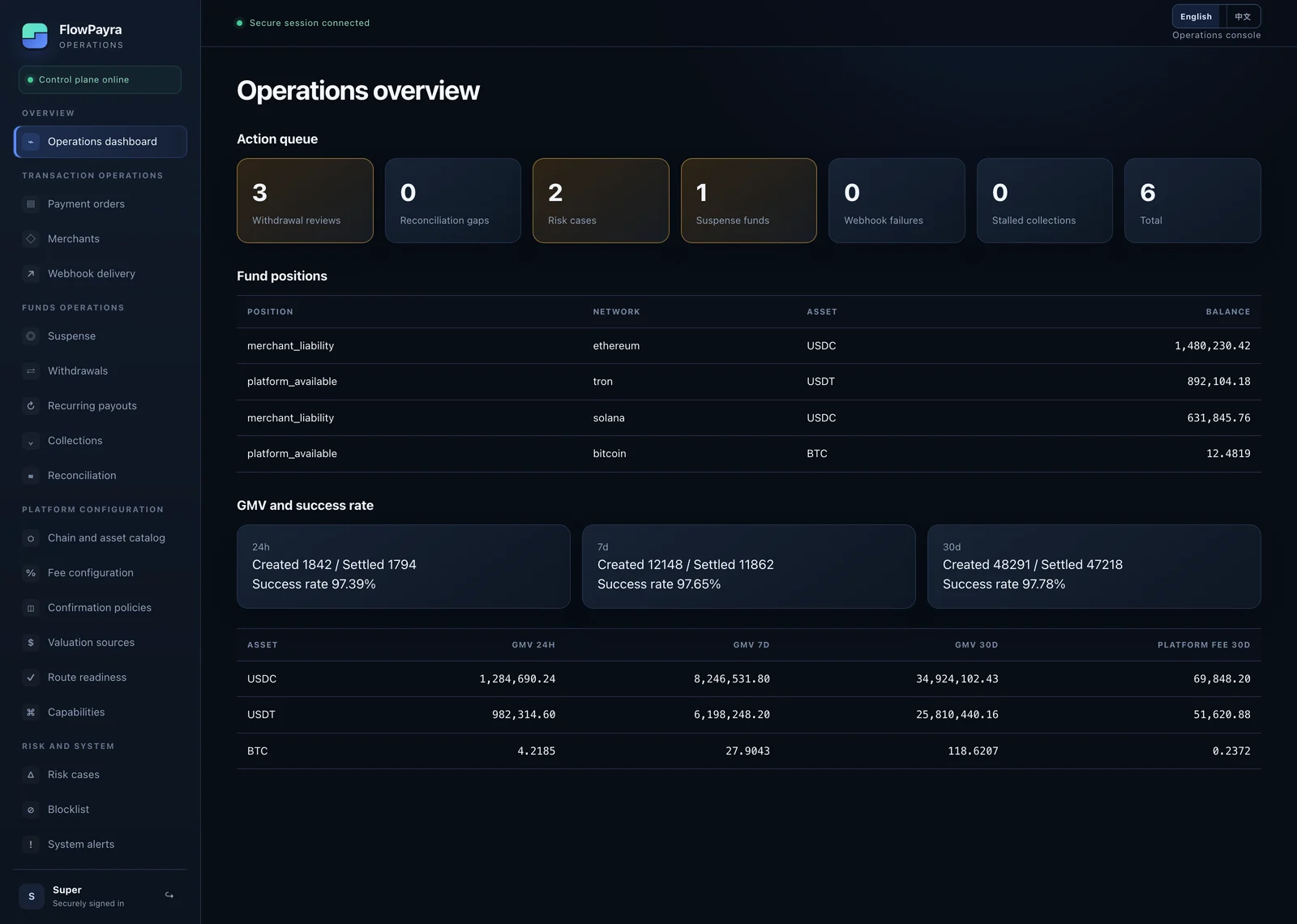
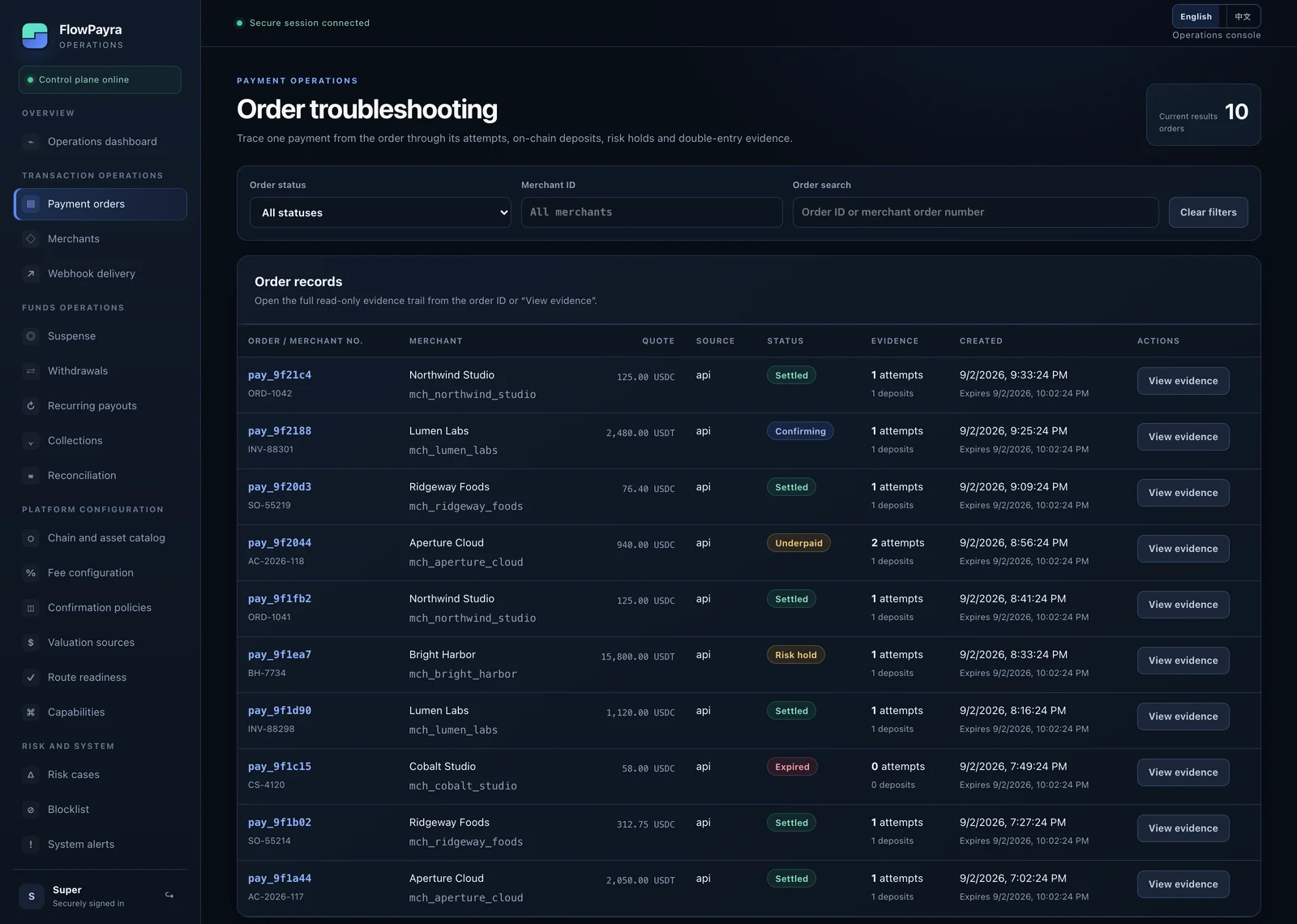
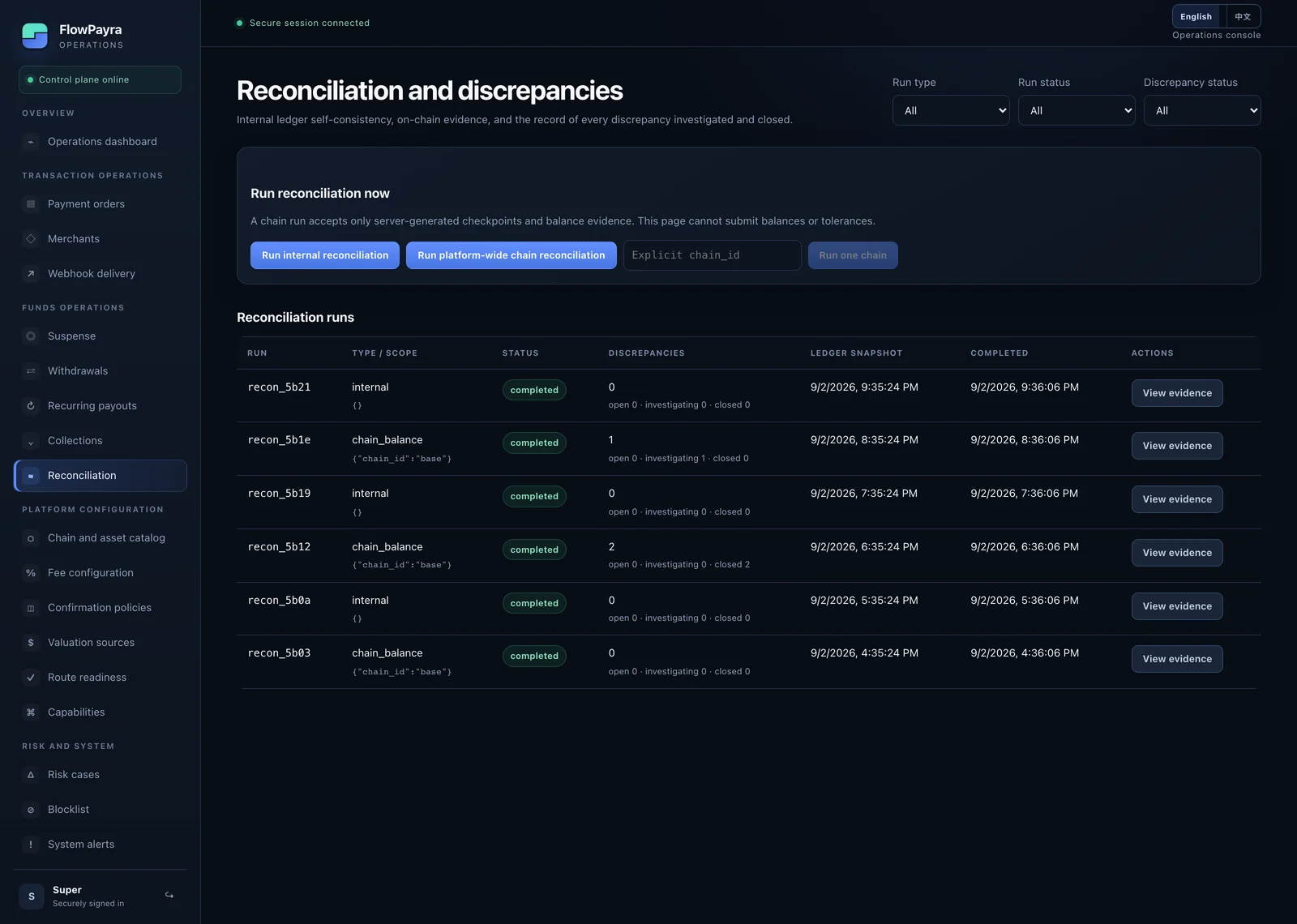
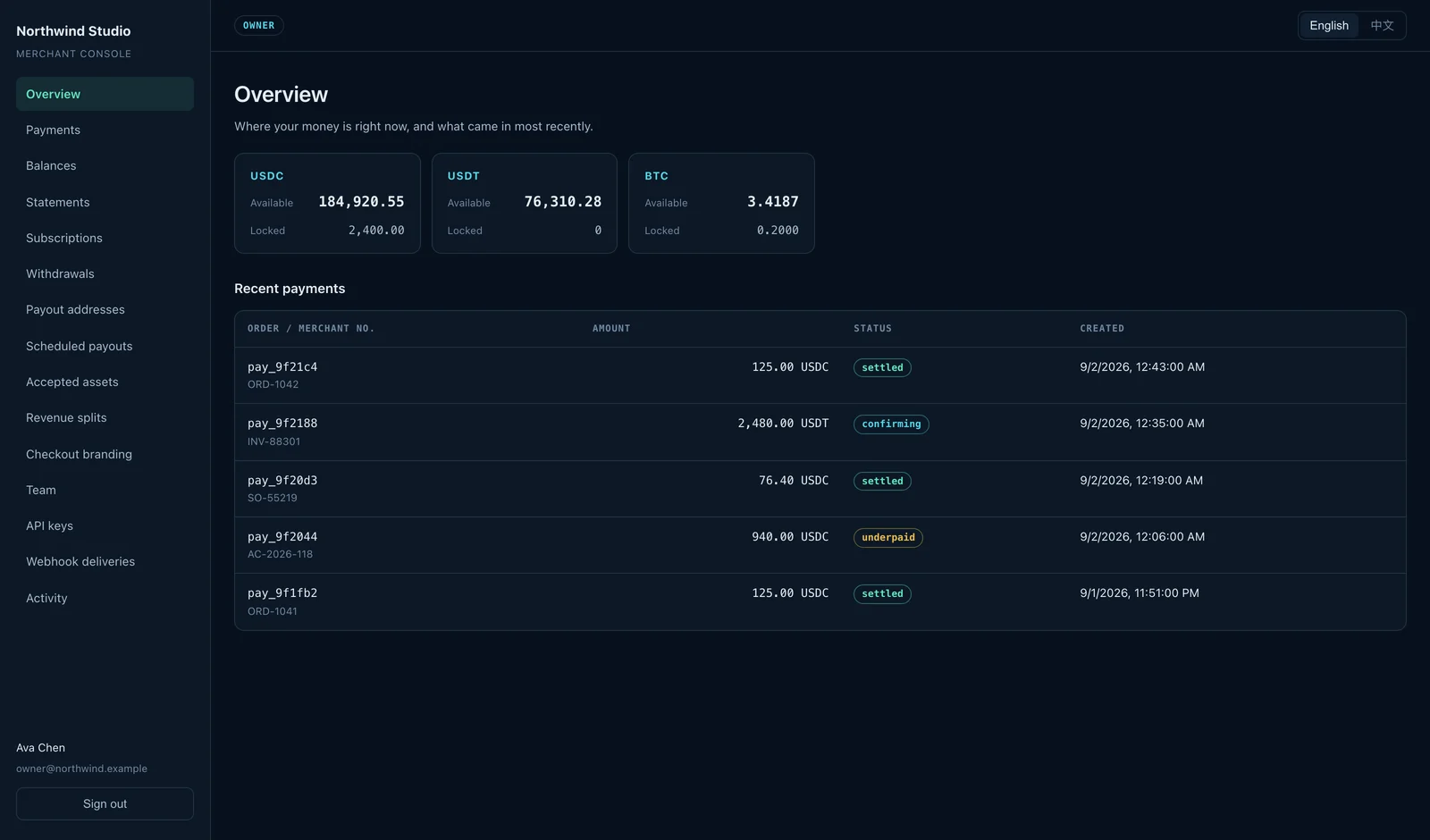
MULTICHAIN BY DESIGN
Four chain ecosystems, one set of books.
Each chain runs by its own rules, and your accounting stays in one place.
01Ξ
EVM
ETH · USDC · ERC-20
02T
TRON
TRX · TRC-20
03◎
SOLANA
SOL · SPL · Token-2022
04₿
BITCOIN
BTC · UTXO · PSBT
THE SIGNING BOUNDARY
Treasury keys live on one offline machine.
Everything a payment needs runs online. The authority to move funds sits with the offline signer.
- Hosted checkout
- Merchant API
- Ledger
- Chain scanner
- ✓Task package hash matches
- ✓Derived address equals the sender
- ✓Destination is on the local allowlist
!One documented exception: relayer keys for x402 and collection hold gas only, and pay a fixed recipient.
WHAT HAPPENS TO A PAYMENT
You can see where a payment is at any moment.
01
Create
The moment the order exists, the accepted assets, fees and split rules are locked to it.
02
Watch
The scanner finds the transaction and follows it until the chain’s confirmation policy is met.
03
Settle
The ledger records both sides, your webhook fires, and anything unusual goes to an operator.
THREE WAYS TO GET PAID
Sell something, charge for an API, or run a marketplace.
COMMERCE
Order$125.00#1042
✓ConfirmedUSDC
USDC→BASE
Global crypto checkout
Let the customer choose the asset and network. You still see one settlement.
AI & API
POST /v1/inference200Usage metered18.4K tokens
Settled$0.024 USDC
Agent-native x402
Charge per call at a fixed price, or by what was actually used.
PLATFORMS
Platform balance$48,240.80Split rule · 50/30/20
A$12.4K✓ Paid outB$8.1K✓ Paid outC$4.8K✓ Paid out
Marketplaces & payouts
Set the fee and split rules once, then pay out on a schedule you control.
Offline signerThe only holder of the private key
✓SIGNING STAYS OFFLINE
WHERE THE KEYS LIVE
The power to move money sits offline.
Moving funds takes a signature from a machine that stays off the network.
- ✓Treasury keys live only on the offline signer
- ✓Amounts stay exact down to the token’s smallest unit
- ✓A repeated event still counts once, and a posted entry stays on the record
- ✓Operator roles, risk holds and reconciliation are part of the daily workflow
DEVELOPER FIRST
One signed request to create a payment.
A versioned OpenAPI contract and a TypeScript SDK. The buyer-facing page is already built.
create-payment.ts
import { FlowpayraClient } from '@flowpayra/sdk';

const flowpay = new FlowpayraClient({
  baseUrl: 'https://api.flowpayra.com',
  keyId: process.env.FLOWPAY_KEY_ID,
  secret: process.env.FLOWPAY_SECRET,
});

const payment = await flowpay.payments.create({
  merchant_order_no: 'order-1042',
  quotes: { cur_usdc: { amount: '24.90' } },
});
QUESTIONS
The four questions we get first.
01Which networks does FlowPayra support?+
EVM chains, Tron, Solana and Bitcoin. Which specific network and which asset gets switched on for your account is decided one at a time.
02Does FlowPayra hold private keys?+
The online API, database, worker and scanner hold extended public keys. The key that signs a transfer lives on a separate offline machine.
03Can it support usage-based AI payments?+
Yes. Charge a fixed price per call, or meter what was actually used. Authorization the caller did not spend goes back to their credit balance.
04Is FlowPayra a hosted service or self-hosted?+
Either one. Hosting, the networks you run and who operates what are agreed per deployment.
Tell us what you want to collect.
Say a bit about your setup and we will tell you how it would connect.
Start a conversation